Ethereum roulette payout structures comprehensive breakdown
The payout ratio determines whether players make smart bets or waste money. Every roulette wager carries specific mathematical expectations that never change, regardless of platform or betting patterns. The numbers printed on payout tables reflect centuries of refinement designed to keep casinos profitable while giving players enough wins to stay engaged. These ratios aren’t negotiable or variable. The game’s fundamental structure fixes them.
Blockchain platforms maintain identical payout standards to traditional casinos. https://crypto.games/roulette/ethereum uses the same tables that Monte Carlo established generations ago. The technology changed how transactions are processed and how fairness is verified, but the actual money returned to players per bet type stayed constant. A straight bet paid 35 to 1 in 1843 and pays 35 to 1 today. Some things don’t need improving.
Straight bet mathematics
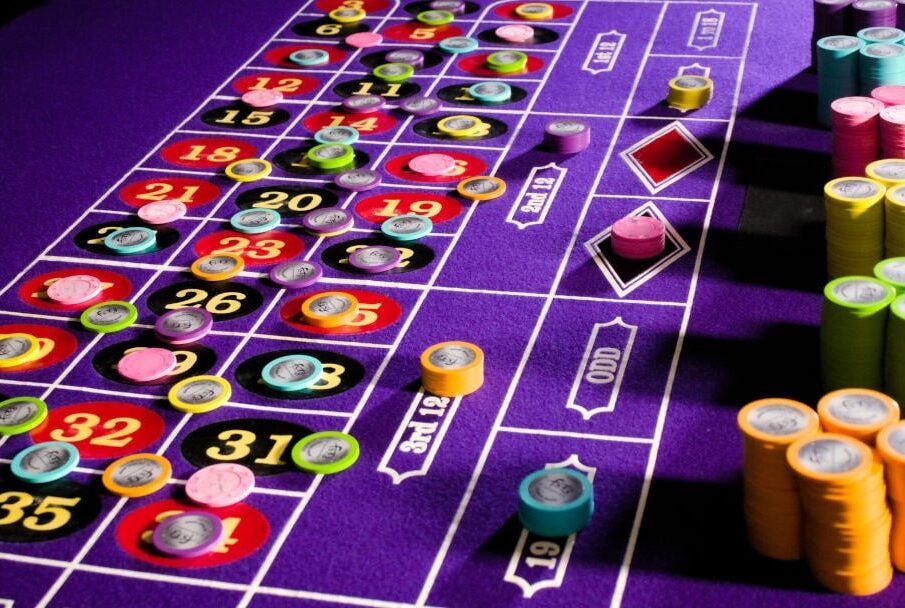
Placing chips on single numbers delivers the biggest potential returns. European wheels contain 37 pockets total. Your chosen number should hit once every 37 spins on average, making the true odds 36 to 1 against you. The casino pays 35 to 1 instead. That single unit difference creates their profit margin. Calculate this over time, and the house edge becomes visible. Betting $1 on number 17 for 37 consecutive spins costs $37 total. Winning once returns $35 plus your $1 stake back, giving you $36. You spent $37 and got back $36. That $1 gap represents 2.7% of your total action, which is exactly the house edge percentage.
American wheels worsen this by adding a 38th pocket. Your number still hits once per 37 spins on average statistically, but now 38 pockets exist. The true odds become 37 to 1 while payouts remain 35 to 1. The two-unit gap doubles the house advantage to 5.26%. This difference compounds brutally over extended sessions.
Split and street
- Split bets cover two adjacent numbers by straddling the line between them. Payouts drop to 17 to 1 since you’re covering twice as many pockets. The math still screws you identically. Two numbers out of 37 should hit once every 18.5 spins. True odds sit at 17.5 to 1, but you get paid 17 to 1. That half-unit gap maintains the same 2.7% house edge.
- Street bets span three numbers in a row, paying 11 to 1. Three pockets out of 37 should hit once per 12.3 spins. True odds calculate to 11.3 to 1. Again, that 0.3 unit difference preserves the house edge precisely. The pattern holds across every inside bet category. Corner bets pay 8 to 1 on four numbers, where true odds are 8.25 to 1. Six-line bets return 5 to 1 when true odds sit at 5.17 to 1.
Notice how the house edge never changes despite different payouts. The casino structures each bet type to maintain its 2.7% advantage mathematically. Players can’t find better value by switching between inside bet categories. They all cost the same percentage of action over time.
Announced bet payouts
French terminology describes multi-chip bets covering wheel sectors. Voisins du zero costs nine units to cover 17 numbers near zero. Different numbers within this sector pay different amounts depending on whether they hit via splits, corners, or other configurations. A split number hits returns 17 to 1 on one chip, while the other eight chips lose. Corner hits pay 8 to 1 on two chips while seven chips disappear. Calculating the overall house edge on these complex bets requires averaging all possible outcomes weighted by their probability. The math still produces 2.7% because these announced bets just package standard wagers together. No secret advantage exists. Tier bets and orphelins follow identical principles. The fancy French names don’t change the underlying mathematics governing each chip placement.